Understanding 3D Printing Technology
3D printing, also known as additive manufacturing, is transforming industries with its ability to create complex structures layer by layer from digital models. This innovative technology is not only reshaping the manufacturing landscape but also redefining how we think about design, production, and even supply chains. When exploring options, 3D Printing enables engineers, artists, and businesses to develop custom solutions that were previously unimaginable.
What is 3D Printing?
At its core, 3D printing is a process of creating a three-dimensional object from a digital file. This involves laying down successive layers of material until the object is completed. The materials used in 3D printing can vary significantly, ranging from plastics and metals to ceramics and even biological tissues, making it an incredibly versatile production method.
History and Evolution of 3D Printing
The concept of 3D printing dates back to 1984, when Chuck Hull invented stereolithography, the first 3D printing process. Since then, the technology has evolved dramatically. The 1990s saw the introduction of various methods such as selective laser sintering (SLS) and fused deposition modeling (FDM), which have become synonymous with hobbyist and professional 3D printing. More recently, advancements in materials science and software development have accelerated the adoption of 3D printing across industries.
Key Technologies Behind 3D Printing
3D printing encompasses several distinct technologies, each with its unique advantages and applications. Some key techniques include:
- Fused Deposition Modeling (FDM): This is the most common type of 3D printing technology for consumer printers, where melted filament is extruded layer by layer.
- Stereolithography (SLA): This method uses a laser to cure resin into hardened plastic, creating high-resolution models.
- Selective Laser Sintering (SLS): A process that uses a laser to sinter powdered material, allowing for complex geometries and durable parts.
- Binder Jetting: This technology utilizes a liquid binder to bond powdered material, enabling full-color printing and intricate designs.
Applications of 3D Printing Across Industries
3D Printing in Manufacturing and Production
In the manufacturing sector, 3D printing is revolutionizing traditional production methods. It allows for rapid prototyping, which significantly reduces development cycles. Companies can create prototypes quickly, iterate on designs, and bring products to market faster than ever. The automotive industry, for example, utilizes 3D printing to produce lightweight components and tools, enhancing performance and reducing manufacturing costs.
3D Printing in Healthcare: Revolutionizing Prosthetics and Implants
3D printing is making significant strides in healthcare, especially in the fields of prosthetics and implants. Custom prosthetics tailored to the individual's anatomy can be produced at a fraction of the cost and time compared to traditional manufacturing methods. Furthermore, bioprinting is on the horizon, with potential applications in tissue engineering and organ transplantation, marking a new frontier in personalized medicine.
Creative Uses of 3D Printing in Arts and Design
Artists and designers are increasingly adopting 3D printing to push creative boundaries. From intricate sculptures to custom jewelry, 3D printing allows for designs that would be impossible or prohibitively expensive to create by hand. Notable installations, such as 3D-printed architectural structures, illustrate how this technology can blend art with functionality.
Benefits and Challenges of 3D Printing
Cost Efficiency and Customization Advantages
One of the primary benefits of 3D printing is its cost efficiency, especially for low-volume production. Traditional methods often require expensive molds and tooling, whereas 3D printing eliminates these initial costs. Additionally, the customization capabilities of 3D printing enable businesses to produce tailored products that meet specific customer needs, enhancing customer satisfaction and engagement.
Common Challenges Faced in 3D Printing Implementation
Despite its advantages, several challenges must be addressed to fully harness the potential of 3D printing. These include:
- Material Limitations: Certain materials are not suitable for all applications, and finding the right material for a specific requirement can be challenging.
- Quality Control: Ensuring consistent print quality can be difficult, particularly with complex designs.
- Intellectual Property: The ease of copying designs raises significant legal and ethical issues regarding ownership and patents.
Future Trends in 3D Printing: What to Expect
The future of 3D printing holds exciting possibilities. As technology continues to advance, we can expect:
- Increased Automation: Automation in 3D printing processes will enhance efficiency and reduce labor costs.
- Material Innovation: The development of new materials, including biodegradable options, will broaden the applicability of 3D printing.
- Integration with AI: AI will play a crucial role in optimizing design and manufacturing processes, leading to smarter and more efficient operations.
Getting Started with 3D Printing
Choosing the Right 3D Printer for Your Needs
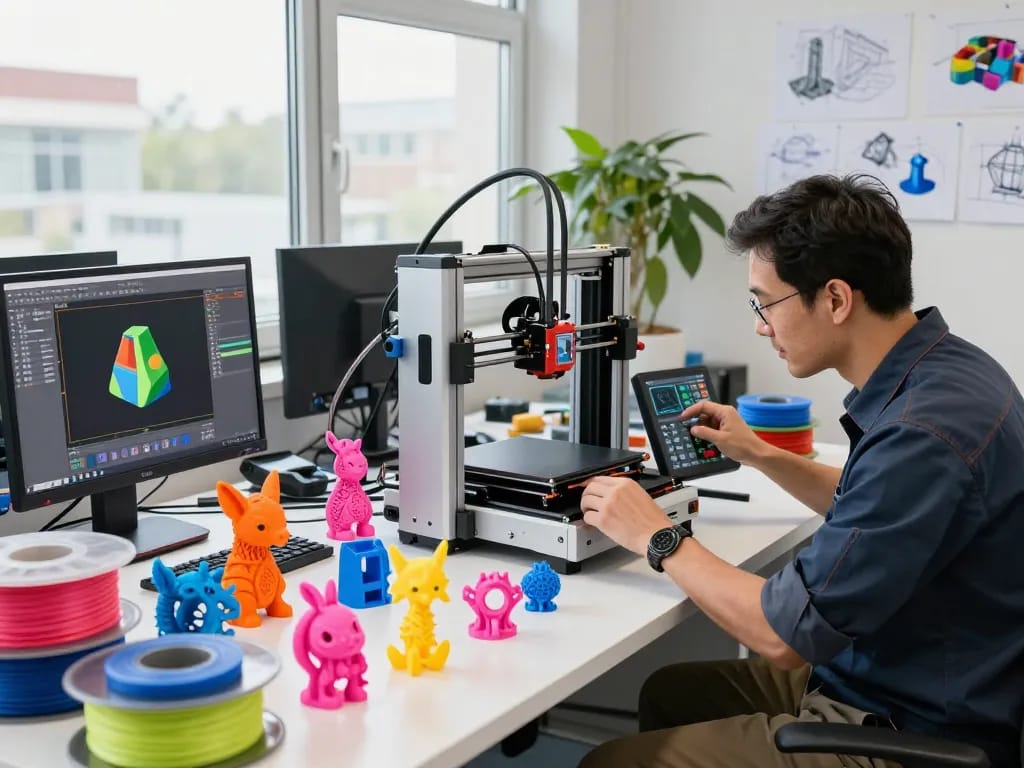
When selecting a 3D printer, consider factors such as the type of materials you wish to print, the desired print quality, and your budget. Entry-level printers like FDM models are perfect for hobbyists, while professional-grade machines with advanced capabilities are suited for businesses looking for high precision and quality.
Basic Materials Required for 3D Printing Projects
Common materials used in 3D printing include:
- PLA: A biodegradable plastic that is easy to print with and ideal for beginners.
- ABS: A more durable, heat-resistant option commonly used for functional parts.
- Resins: Used in SLA printers, resins can offer high detail and smooth finishes.
- Nylon: Known for its strength and flexibility, suitable for functional prototypes and end-use parts.
Step-by-Step Guide to Your First 3D Print
Embarking on your 3D printing journey can be exciting. Follow these steps to achieve your first print:
- Download a Model: Start with a pre-designed model from websites like Thingiverse or GrabCAD.
- Prepare Your Printer: Set up your printer according to the manufacturer's instructions and ensure it is calibrated.
- Slice the Model: Use slicing software to convert the model into a format your printer can understand, adjusting settings according to the material.
- Print: Start the print process and monitor it for any potential issues.
- Post-Processing: After printing, remove supports, sand edges, or apply paint to finish your model.
Community and Resources for 3D Printing Enthusiasts
Online Platforms for 3D Model Sharing
Several online platforms facilitate 3D model sharing and collaboration among users, including Thingiverse, MyMiniFactory, and Cults3D. These communities allow users to download, modify, and share designs, fostering an environment of creativity and innovation.
3D Printing Forums and Community Support
Joining forums such as Reddit's r/3Dprinting or dedicated platforms like 3DPrintBoard can help novices and experts alike connect, share experiences, and troubleshoot common issues. Community support is invaluable for learning best practices and gaining insights from others in the field.
Educational Resources and Courses for Advancement
To improve your 3D printing skills, consider enrolling in online courses available on platforms like Coursera, Udemy, or LinkedIn Learning. These courses often cover aspects from basic operation to advanced design techniques, providing comprehensive knowledge that caters to various skill levels.
What are the costs associated with 3D printing?
The costs of 3D printing can vary widely based on several factors, including:
- Printer Cost: Hobbyist printers can range from $300 to $1,000, while industrial-grade printers can exceed $50,000.
- Material Costs: Monthly material expenses can range from $20 for hobbyists to over $500 for professional projects.
- Labor and Maintenance: While hobbyists may print on their own, professional setups often include labor costs and higher maintenance due to intensive use.
How can I improve my 3D printing skills?
Improving your 3D printing skills generally involves practice, studying various techniques, and engaging with communities. Participating in challenges and collaborating on projects can provide practical experience and enhance your understanding.
What materials are best for 3D printing?
The best materials depend on your specific project requirements. PLA is ideal for beginners, while ABS is better suited for applications requiring durability. For specialized needs, consider materials like nylon or flexible filaments.
How does 3D printing impact sustainability?
3D printing has the potential to positively impact sustainability by minimizing waste through additive manufacturing processes. However, the environmental impact of the materials used and energy consumption during printing must also be considered.
What are the latest trends in 3D printing for 2026?
As we look towards 2026, trends likely to shape the future of 3D printing include increased adoption in construction with large-scale 3D printing, advancements in bioprinting for medical applications, and the ongoing emergence of innovative materials that enhance the capabilities of 3D printers.