
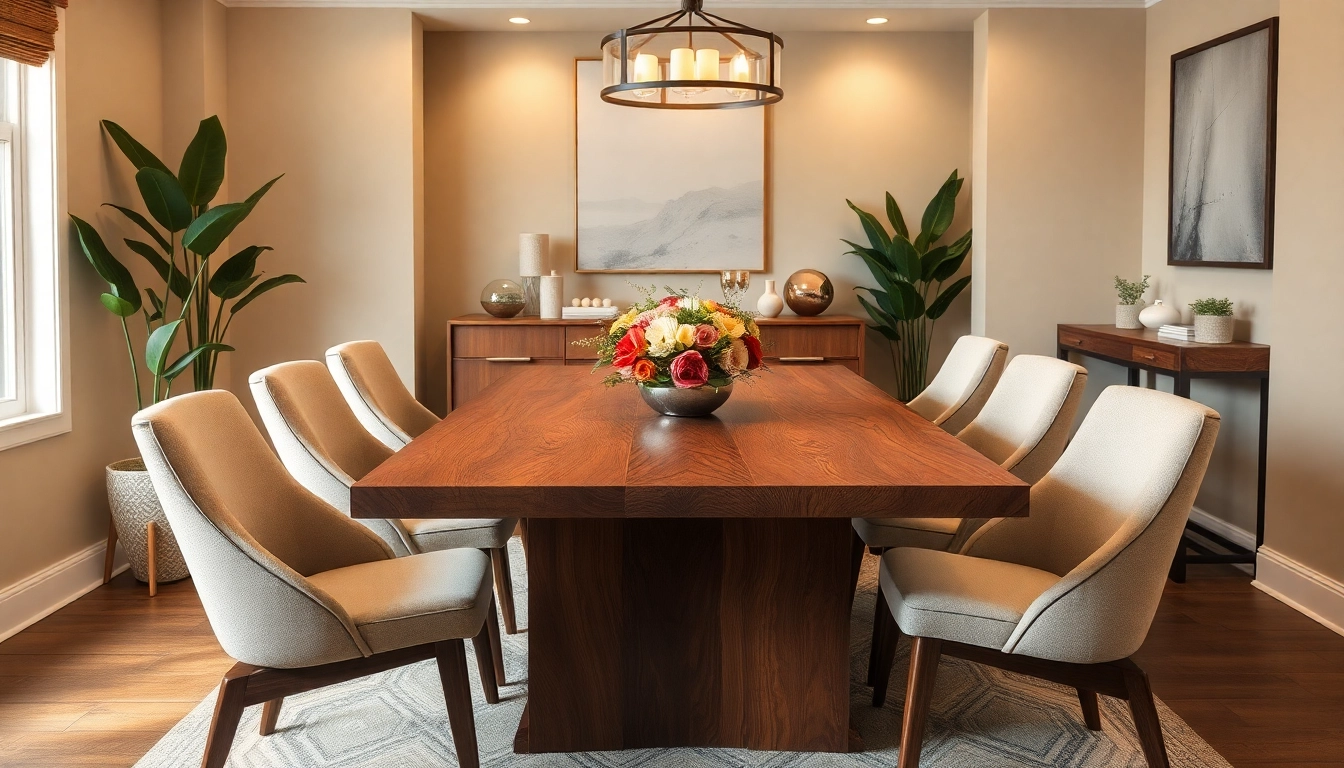
Understanding the Custom Dining Table Market
In the modern furniture industry, the custom dining table market has witnessed a significant transformation, driven by consumers’ desire for personalized and high-quality options. With a shift towards sustainable and local manufacturing, many homeowners and businesses are now seeking dining tables that can be tailored to their unique specifications. This growing trend reflects a broader cultural appreciation for handcrafted craftsmanship and the value of durable, aesthetically pleasing furniture. For those in search of a Custom dining table, various factors come into play, influencing their choices and preferences.
Current Trends in Custom Dining Tables
As we advance into 2026, several notable trends are shaping the landscape of custom dining tables. A significant trend is the use of reclaimed and sustainably sourced materials, which not only provide unique aesthetics but also reduce environmental impact. Additionally, multifunctional designs are gaining popularity, with features such as extendable tables catering to both intimate family meals and larger gatherings. Minimalist aesthetics with clean lines and natural finishes dominate current styles, promoting a serene dining environment.
The Importance of Handcrafted Quality
Handcrafted quality remains paramount in the custom dining table market. Consumers increasingly value artistry over mass production, leading to a resurgence in traditional craftsmanship. Handcrafted tables are not just furniture; they are works of art, often reflecting the personality and preferences of the owner. This aspect enhances the emotional connection people have with their dining spaces, making each meal a special occasion.
Key Features to Look for in Custom Dining Tables
- Material Selection: Look for options such as solid hardwoods like oak, walnut, or maple that ensure durability.
- Customization: Choose tables that offer flexible designs, sizes, and finishes to fit your unique space.
- Functionality: Consider tables with additional features, such as storage solutions or extendable leaves.
- Craftsmanship: Ensure the table is built by skilled artisans who prioritize quality and detail.
Benefits of Customization for Your Dining Space
Choosing a custom dining table allows homeowners to create a piece that perfectly complements their aesthetic preferences and functional needs. Customization promotes an individualized approach to design that can greatly enhance the overall dining experience.
Enhancing Aesthetic Appeal with Custom Designs
When it comes to interior design, the dining area often serves as a focal point of the home. A custom dining table not only elevates the aesthetic appeal of the space but also reflects the owner’s personal style. From rustic farmhouse looks to sleek modern designs, the customization process allows for a variety of styles that can harmonize with existing decor.
Maximizing Space and Functionality
In many homes, especially smaller ones, maximizing space is a priority. Custom dining tables can be designed to fit specific dimensions, ensuring that they serve their purpose without overcrowding the room. Choices such as drop-leaf tables or built-in storage can enhance functionality, making the dining area both practical and inviting.
Materials and Finishes: Making the Best Choice
Choosing the right materials and finishes is critical to achieving both aesthetic appeal and functional durability. Options such as stained or natural finishes can dramatically change the look of your table, while solid hardwoods ensure longevity. Ordering samples of various finishes can help in making an informed decision that complements your home.
Choosing the Right Custom Dining Table for Your Needs
Selecting the perfect custom dining table involves several considerations that go beyond mere aesthetics. From understanding personal style to evaluating practical space requirements, making the right choice can significantly enhance your dining experience.
Understanding Your Style Preferences
Before approaching a custom furniture maker, take the time to identify your style preferences. Whether you lean towards modern, traditional, or eclectic designs, having a clear vision will help guide the customization process. Inspiration can be drawn from home design magazines, websites, and social media platforms like Pinterest, where you can collect images that resonate with your taste.
Evaluating Dimensions and Space Requirements
Understanding the dimensions of your dining space is vital in choosing a custom table. Measure the available area to ensure the table fits comfortably, allowing for movement and additional seating if necessary. Consider how many people you typically entertain and choose a size that accommodates your needs while leaving adequate room for other furniture.
Important Considerations for Dining Room Layout
The layout of your dining room can significantly impact the choice of a dining table. Consideration should be given to the flow of the room, the positioning of lighting fixtures, and the proximity to adjacent spaces. A well-thought-out layout enhances the functionality of the dining area and contributes to a pleasant dining experience.
Working with Custom Furniture Makers
Partnering with a reputable custom furniture maker is essential to ensuring the successful design and production of your dining table. Understanding how to communicate your vision effectively will help facilitate a smooth collaboration, leading to satisfying results.
How to Select a Reputable Craftsman
When searching for a custom furniture maker, seek out professionals with a proven track record and positive customer reviews. Look for craftsmen who specialize in the specific type of furniture you desire, and consider visiting their workshop to see their craftsmanship firsthand. Asking for references can also provide insight into their reliability and the quality of their work.
Questions to Ask Before You Order
Prior to placing an order, it’s crucial to ask specific questions to clarify the production process and expectations. Inquire about materials, lead times, warranty policies, and customization options. Understanding these factors will ensure you are fully informed and comfortable with your decision.
The Role of Communication in the Design Process
Effective communication is vital when working with custom furniture makers. Articulating your vision clearly and providing detailed feedback throughout the design and production phases can significantly affect the outcome. Establishing a collaborative relationship fosters creativity and ensures that your dining table meets your expectations.
Future Trends in Custom Dining Furniture (2026 and Beyond)
The custom dining furniture market is expected to evolve in fascinating ways as we move further into 2026. Emerging trends reflect changing consumer preferences and advancements in technology and manufacturing processes.
The Impact of Sustainability on Dining Furniture Choices
Sustainability continues to influence purchasing decisions, with more consumers concerned about environmental impacts. The demand for sustainably sourced materials and eco-friendly production practices is driving manufacturers to adopt greener approaches, thus reshaping the custom dining table landscape.
Technological Innovations in Custom Furniture Manufacturing
Advancements in technology are ushering in a new era for custom furniture manufacturing. Techniques such as 3D printing and CNC machining are making it easier to create intricate designs with precision. These innovations not only enhance the customization process but also improve efficiency, resulting in shorter lead times for consumers.
Predictions for Style and Functionality Trends
As we look ahead, we anticipate an increase in demand for multifunctional dining tables that cater to diverse lifestyles. Features like integrated storage and adaptable sizes will become even more important as consumers seek versatile solutions for their living spaces. Additionally, a return to organic shapes and textures may emerge as a counterbalance to the predominance of minimalism in furniture design.