
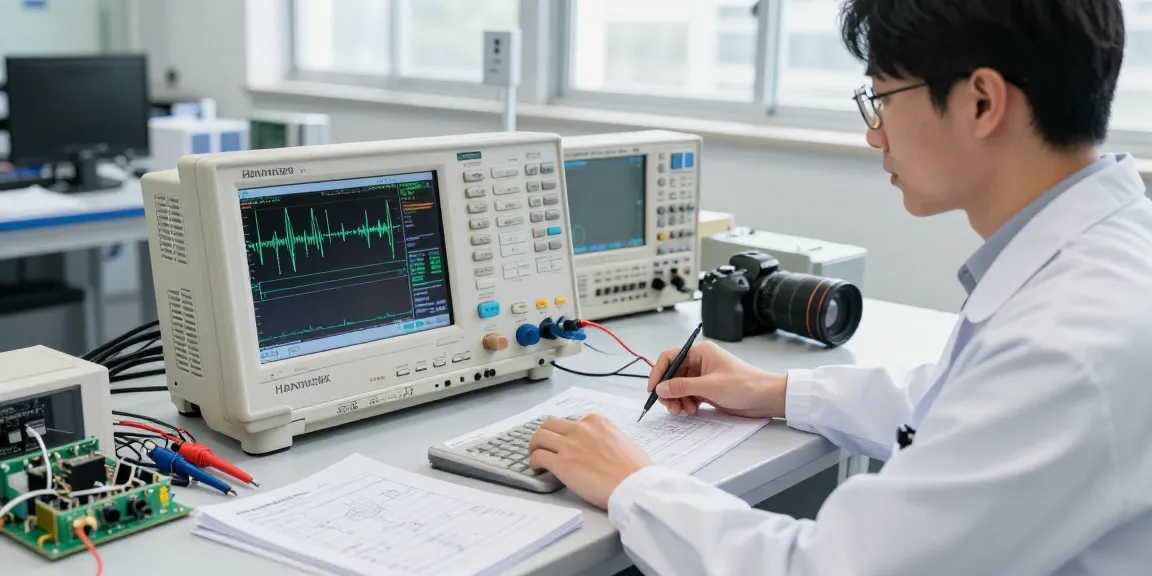
Understanding the Digital Oscilloscope
The Hanmatek DOS1202 is a state-of-the-art Digital Oscilloscope designed for both hobbyists and professionals who require high precision in their measurements. With a bandwidth of 200 MHz and two channels, the DOS1202 is not just another piece of test equipment; it’s an essential tool for various applications in electronics and engineering. In a world where precision is paramount, understanding the intricacies and functionalities of digital oscilloscopes can significantly enhance your ability to troubleshoot and innovate in your projects.
What is a Digital Oscilloscope?
A digital oscilloscope is an electronic device that captures and displays electrical signals in a visual format. Unlike traditional analog oscilloscopes, which use cathode-ray tubes (CRT) to produce waveforms, digital oscilloscopes use digital signal processing techniques to convert analog signals into digital data for analysis. This advancement allows for more accurate measurements, better storage capabilities, and the ability to perform complex analyses.
Key Features of the Digital Oscilloscope
Modern digital oscilloscopes come equipped with several features that enhance their functionality:
- High Sampling Rate: Digital oscilloscopes can sample signals at rapid rates, allowing them to capture fast transient signals with accuracy.
- Deep Memory: With substantial memory depth, they can record long periods of data without losing detail, making them ideal for capturing non-repeating events.
- User-Friendly Interface: Many digital oscilloscopes feature intuitive controls and displays that simplify operation, making them accessible for users with varying degrees of experience.
- Multiple Trigger Options: Advanced triggering capabilities allow users to isolate specific events, enabling precise measurement and analysis.
How a Digital Oscilloscope Differs from Analog Models
While both digital and analog oscilloscopes serve the same primary purpose—measuring electrical signals—their methodologies differ significantly. Digital oscilloscopes provide better accuracy, storage, and processing capabilities. They can perform automatic measurements and display them instantly, unlike their analog counterparts, which require manual interpretation of the waveform. This difference makes digital oscilloscopes more suitable for modern electronic design and troubleshooting tasks.
Applications of Digital Oscilloscopes
Digital oscilloscopes have a broad range of applications across various fields, including electronics design, troubleshooting, and educational environments. When exploring options, Digital Oscilloscope solutions like the Hanmatek DOS1202 can greatly enhance your efficiency and accuracy in many of these scenarios.
Using Digital Oscilloscopes in Electronics Design
Engineers utilize digital oscilloscopes during the design and testing of electronic circuits. They can observe real-time waveforms, ensuring that the circuit operates as intended. Features such as triggering and zooming into specific parts of a waveform allow for thorough analysis and troubleshooting of circuit designs. For instance, when testing a switching power supply, an engineer can use the oscilloscope to monitor the switching node waveform to detect any overshoot or ringing.
Signal Analysis and Troubleshooting
In troubleshooting, digital oscilloscopes are invaluable tools. They help identify problems in both digital and analogue circuitry by displaying the signal behaviour over time. Engineers can detect anomalies such as noise, distortion, or signal dropouts, which are essential for maintaining circuit integrity. The ability to capture transient events is particularly beneficial when diagnosing intermittent problems.
Educational Uses in Learning Environments
In educational setups, digital oscilloscopes serve as excellent teaching tools. They enable students to visualise electrical signals, facilitating a better understanding of concepts such as frequency, amplitude, and phase relationships. By using modern oscilloscopes, educators can provide practical experience that reinforces theoretical knowledge, preparing students for real-world applications in engineering and electronics.
How to Use the Hanmatek DOS1202
The Hanmatek DOS1202 is designed for ease of use, making it suitable for both beginners and seasoned professionals. Here’s a step-by-step guide to operating this device effectively:
Step-by-Step Guide to Operating the Device
- Safety Preparation: Always ensure you are using the oscilloscope within its rated voltage limits to avoid damage.
- Power On and Initialization: Connect the power supply and switch on the oscilloscope. Allow it to undergo its self-test.
- Connect Signal: Attach the probes to the points in the circuit you wish to measure.
- Configure Channel Settings: Set the vertical scale and coupling mode for each channel as per your requirements.
- Adjust Time Base: Change the time base settings to suit the frequency of the signal you are measuring.
- Configure Trigger: Set the trigger level to stabilize the waveform display for easier analysis.
- Measure Signal: Use the various measurement functions available on the oscilloscope to analyze the signal parameters.
- Capture Transient Events: Use the single-shot acquisition mode to capture one-time events that are vital for advanced troubleshooting.
- Save or Export Data: Use the built-in memory function to save your waveforms for later analysis.
Common Signal Measurement Techniques
Using the Hanmatek DOS1202 for signal analysis involves several techniques:
- Peak-to-Peak Voltage: Measure the maximum and minimum values of the waveform to understand voltage swings.
- Frequency and Period: Calculate the time taken for one complete cycle to determine frequency.
- Rise and Fall Times: Measure how quickly the signal rises and falls, which is critical for assessing signal integrity in fast switching applications.
Adjusting Settings for Optimal Performance
It’s essential to configure the settings correctly for accurate measurements. This involves adjusting the vertical sensitivity, time base settings, and triggering options to match the characteristics of the signal you’re measuring. Always consult the user manual for specific instructions related to the DOS1202 to make the most of its features.
Troubleshooting and Maintenance
Like any precision instrument, maintaining your digital oscilloscope will ensure its longevity and reliability. Here are some best practices for troubleshooting and maintenance:
Common Issues and Their Solutions
Users may encounter various challenges when operating digital oscilloscopes, including:
- No Display: Ensure the oscilloscope is powered on and check connections.
- Poor Signal Quality: Verify probe connections and adjust coupling mode.
- Inaccurate Measurements: Recalibrate the device regularly to maintain measurement accuracy.
Maintaining Your Digital Oscilloscope
Regular maintenance involves cleaning the probes, checking for physical damage, and ensuring proper storage conditions. Keeping software updated can also help avoid bugs and improve functionality.
When to Seek Professional Support
If you’re experiencing persistent issues that you cannot resolve, it may be time to consult with a professional. Hanmatek provides excellent customer support, including troubleshooting advice and guidance on repairs.
Future Trends in Digital Oscilloscope Technology
The landscape of digital oscilloscopes is continually evolving, driven by advancements in technology. Here are some trends shaping their future:
Emerging Features and Innovations for 2026
In 2026, we can expect to see more advanced features such as improved connectivity options, enhanced user interfaces, and integration with cloud-based services for data storage and analysis. These developments will further facilitate remote monitoring and collaboration among engineers and researchers.
Impact of AI on Signal Analysis
Artificial intelligence (AI) is set to revolutionise signal processing by enabling intelligent analysis of complex waveforms. Automating the identification of anomalies or trends in data will enhance the efficiency and accuracy of measurements.
Predicted Advances in Digital Oscilloscope Applications
As technology progresses, the applications of digital oscilloscopes will expand into new domains, including telecommunications, automotive electronics, and renewable energy systems. Their role in 5G development and electric vehicle technologies will be paramount as these fields continue to grow.
What is a Digital Oscilloscope used for?
Digital oscilloscopes are primarily used for measuring and analyzing electronic signals in various domains, such as research and development, education, and manufacturing. They apply in diagnosing faults in circuits, verifying signal integrity, and observing the performance of electronic systems.
How do I choose the right Digital Oscilloscope?
When selecting a digital oscilloscope, consider factors such as bandwidth, sample rate, number of channels, and connectivity features. Understanding the specific requirements of your applications will guide you in choosing the right model.
What are the benefits of using the Hanmatek DOS1202?
The Hanmatek DOS1202 offers several advantages including high bandwidth, intuitive controls, multiple measurement functions, and robust construction suitable for various testing environments, making it a reliable choice for both professionals and hobbyists.
Can a Digital Oscilloscope capture transient events?
Yes, digital oscilloscopes can capture transient or one-time events through single-shot acquisition modes, which is critical for diagnosing issues that do not occur consistently.
What warranty support does Hanmatek offer?
Hanmatek provides a 2-year warranty on the DOS1202, covering any manufacturing defects, as well as lifetime technical support for all customers. This commitment ensures that users receive the assistance they need throughout their ownership experience.